We’re officially embarking on the path of making our own movements: Revathi Kant, Titan Company Limited
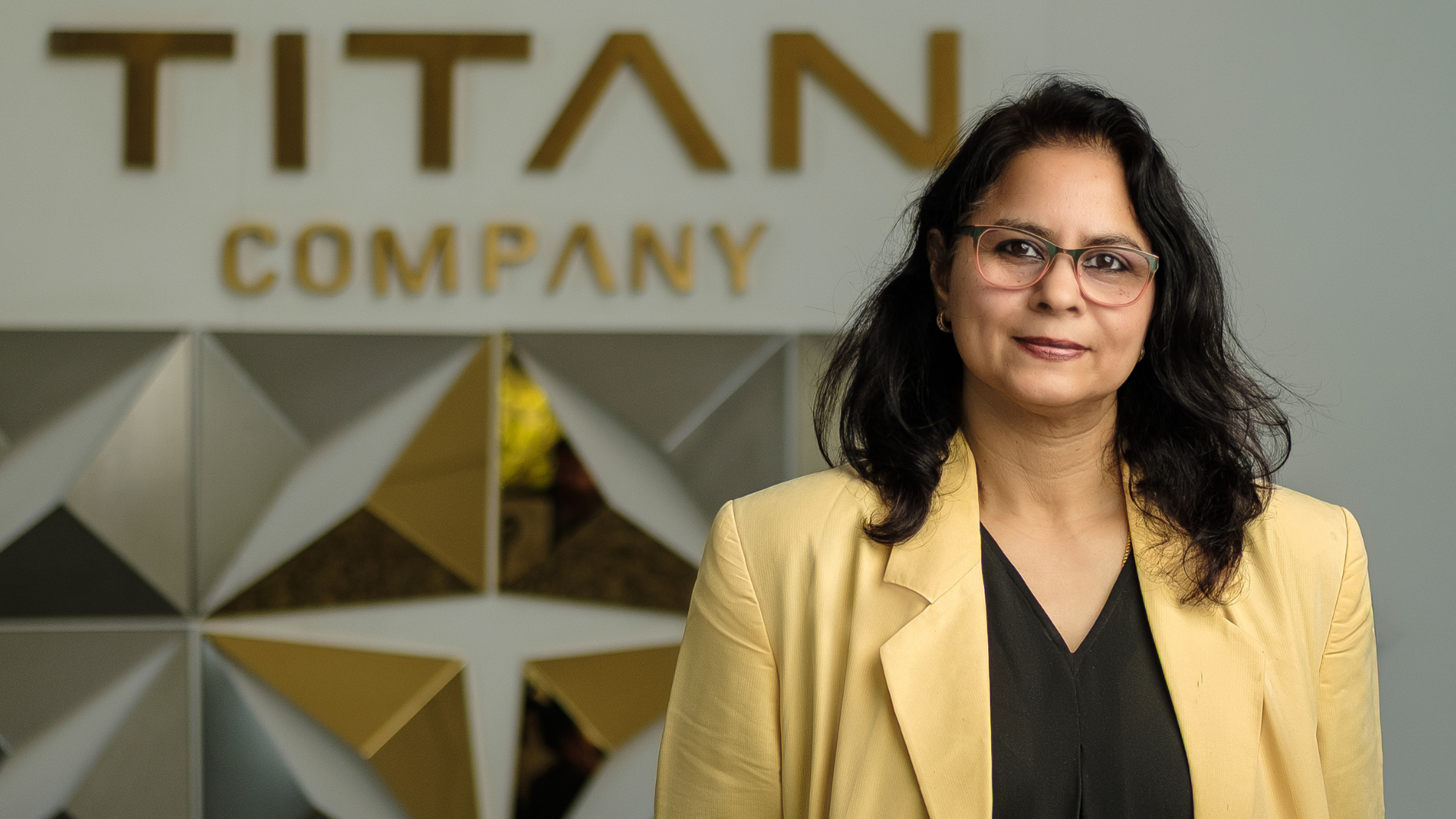

At Titan’s headquarters in Electronic City, Bangalore, GMT India sat down with Revathi Kant, the brand’s Chief Design Officer, for a conversation that meandered freely — the kind that unfolds naturally when there’s so much to celebrate.
The Wandering Meteor, Titan’s newest astronomy-inspired watch with a dial cut from a 120,000-year-old meteorite, has been entered for the 26th annual Grand Prix d'Horlogerie de Genève (GPHG) awards. The 500m Zero Hour continues to win over serious divers and design purists in equal measure. And Made in India: A Titan Story, the show chronicling the brand’s own founding, turned out to be a genuine hit well beyond watch circles.
With so much going right across such different corners of the Titan universe, GMT India couldn’t resist asking Kant the question at the heart of it all: what really goes into conceptualising each of these distinct collections?
Tell us about the journey Titan’s pursuing right now.
Revathi Kant (RK): In India, there has been a lot of action in the space of watchmaking. We’re witnessing a return to all things analogue, and what emerged as the eventual next step for us was to incorporate premiumisation as a focal point of our journey.
Like other brands, we do procure our movements from outside India right now while we do our own product design and put things together here. But the journey which Titan is on right now centres on us making our own movements. So far, we have managed to showcase this through some examples like Jalsa (that went on to become a GPHG entrant), which showcased our expertise in movement manufacturing and creating an Indian tourbillon movement. Encasing it into a product, which is all about the country’s art, craft and culture, contributed to the overall storytelling of the piece.
Right now, we’re certainly moving ahead on this premiumisation journey while retaining a distinctly Indian spirit. Earlier, a Titan watch used to be priced at INR 30,000 or INR 40,000. Today, we are easily selling watches priced at about INR 1.5 lakh, INR 1.7 lakh, and even INR 2 lakh; there are indeed people wanting to buy these watches. So, that has given us immense encouragement to position the brand in the premium space.
The Edge series has enjoyed considerable success over the years. Tell us more about the direction in which the collection is headed.
RK: Edge has been around for nearly 20 years. For a long time, the strategy focused on aesthetic variations to reach different consumer cohorts while keeping the core watch simple, minimal, and classical. But recently, we shifted the direction entirely towards deep technical and material innovation.
First, we pushed into ultra-thin mechanical watchmaking, starting with the Edge Mechanical. Then came our GPHG entry, the Edge Ultra Slim, featuring that distinct disc hand interface. Now, we’re merging those two milestones with the Ultra Slim Mechanical, which we recently showcased at Watches & Wonders. Mechanical watches typically carry a lot of visual weight, but here we’ve preserved the ultra-slim profile and clean, minimalist face. Continuing to push the limits of slim mechanical movements will be central to the Edge roadmap.
Second, movement innovation goes hand in hand with materials. Ever since our ceramic collection took off in 2017–18, we’ve expanded into carbon fibre and titanium. Moving forward, the focus is on creating the slimmest and lightest timepieces possible, keeping Edge as our primary platform for pioneering, highly differentiated design.
.jpg)
How is the product design for the watches conceptualised?
RK: Traditionally, product design for our watches follows a clear path: we conduct extensive research, pick a strong inspiration, build a deep narrative around it, and translate that story into the physical watch.
The major shift happening right now is applying that creative approach to what’s inside the watch — the movement. Instead of just using off-the-shelf movements, we want our designers to conceptualise the movement itself. They’re working hand in hand with our technical development teams to engineer calibres that are uniquely ours. It’s certainly easier said than done because movement design is incredibly complex. But we are officially embarking on that path: treating movement innovation with the exact same depth and seriousness as exterior design.
In terms of familiarising consumers, do you think the brand’s job is to educate consumers about the end product? Or are they already aware of the products?
RK: It’s actually a combination of both. Titan has always grown by shaping the market — creating awareness where it didn’t exist and organising spaces that were fragmented. Today, as India’s luxury landscape expands, we are seeing two distinct groups of consumers. First, there are the true watch connoisseurs. They already own high-end international timepieces, but when we present them with exceptional engineering rooted in an authentic Indian story, it taps into national pride. They’re proudly adding Titan to their luxury collections. Second, there is a rapidly growing audience exposed to high-end automobiles, fine jewellery, and luxury retail. They have the disposable income and the aspiration, but they are still learning what goes into true horology. Historically, Titan democratised watches; now, our role is to build aspiration by educating consumers on the precision, detail, and craftsmanship that define our premium pieces.
You can’t separate the product from the brand story in this segment. We have to elevate both simultaneously to give Indian consumers a world-class luxury piece they are proud to wear.
Image credits: Titan Company Limited