Vacheron Constantin Takes Métiers d’Art into Unfamiliar Territory

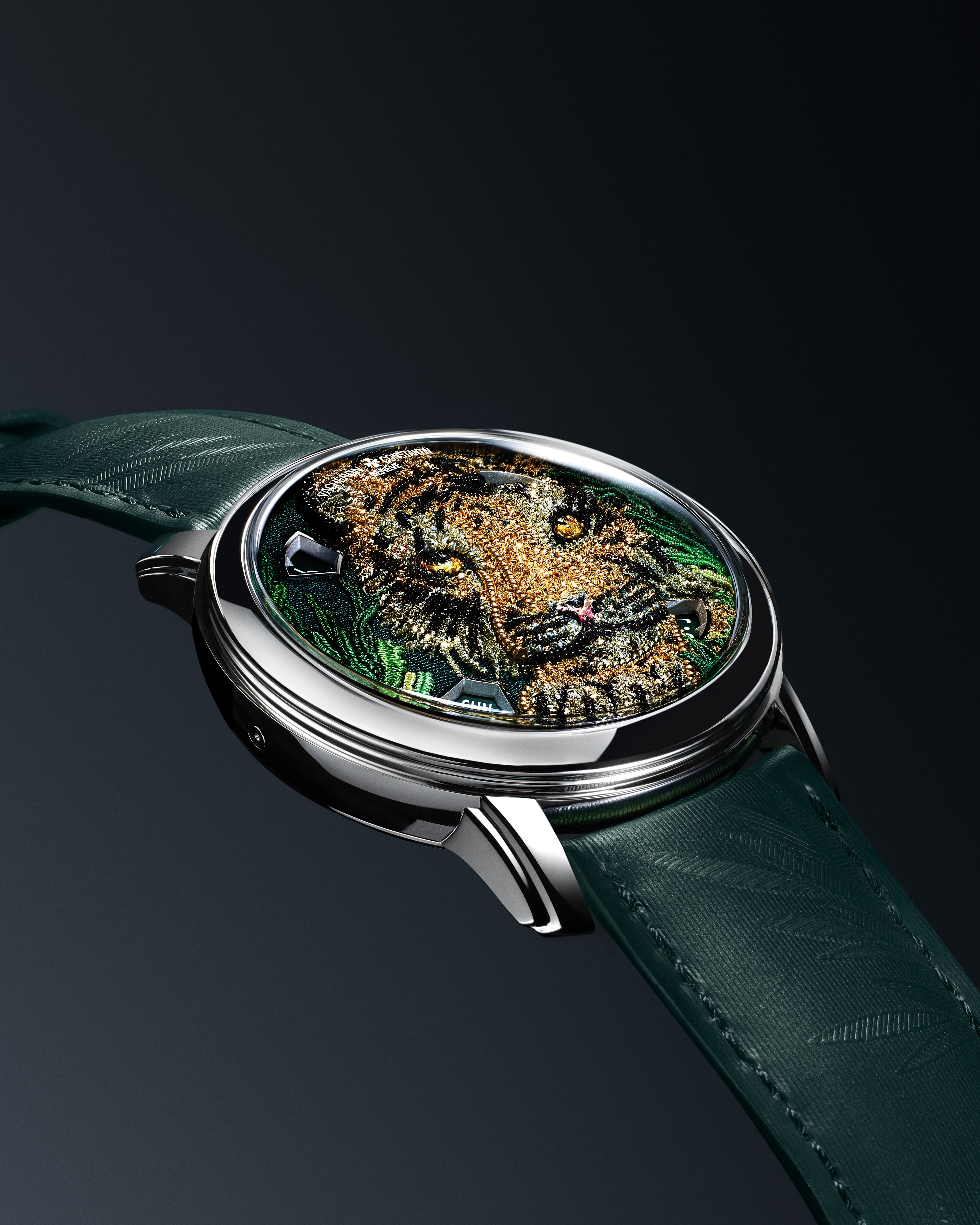
Vacheron Constantin has long treated the dial as a place for artistic expression, but its latest Métiers d’Art project pushes that idea into less familiar territory. Tribute to the Animal Kingdom comprises six concept watches created under the Maison’s One of Not Many Crafts Programme, an initiative designed to bring practices from outside conventional horological decoration into watchmaking. Featherwork, glass sculpting, micro-origami, gold embroidery, paper sculpting and wood marquetry are each asked to survive a radical change of scale and the uncompromising demands of a functioning watch.
That challenge is the point. Traditional métiers d’art at Vacheron Constantin already encompass disciplines such as engraving, enamelling, guillochage and gem-setting. Here, the Maison widens the field by inviting six independent artisans to work within a 42mm case and, crucially, a clearance of no more than four millimetres between the dial and sapphire crystal. The resulting watches are, in essence, studies in miniaturisation as much as ornament.
The Calibre 2460 G4 makes this possible. Hours, minutes, day and date are pushed to four peripheral apertures, leaving the centre of the dial almost entirely open. That architecture turns the watch face into a usable stage, while a specially engraved 22K gold oscillating weight and dedicated embossed straps give the six pieces a common technical framework.
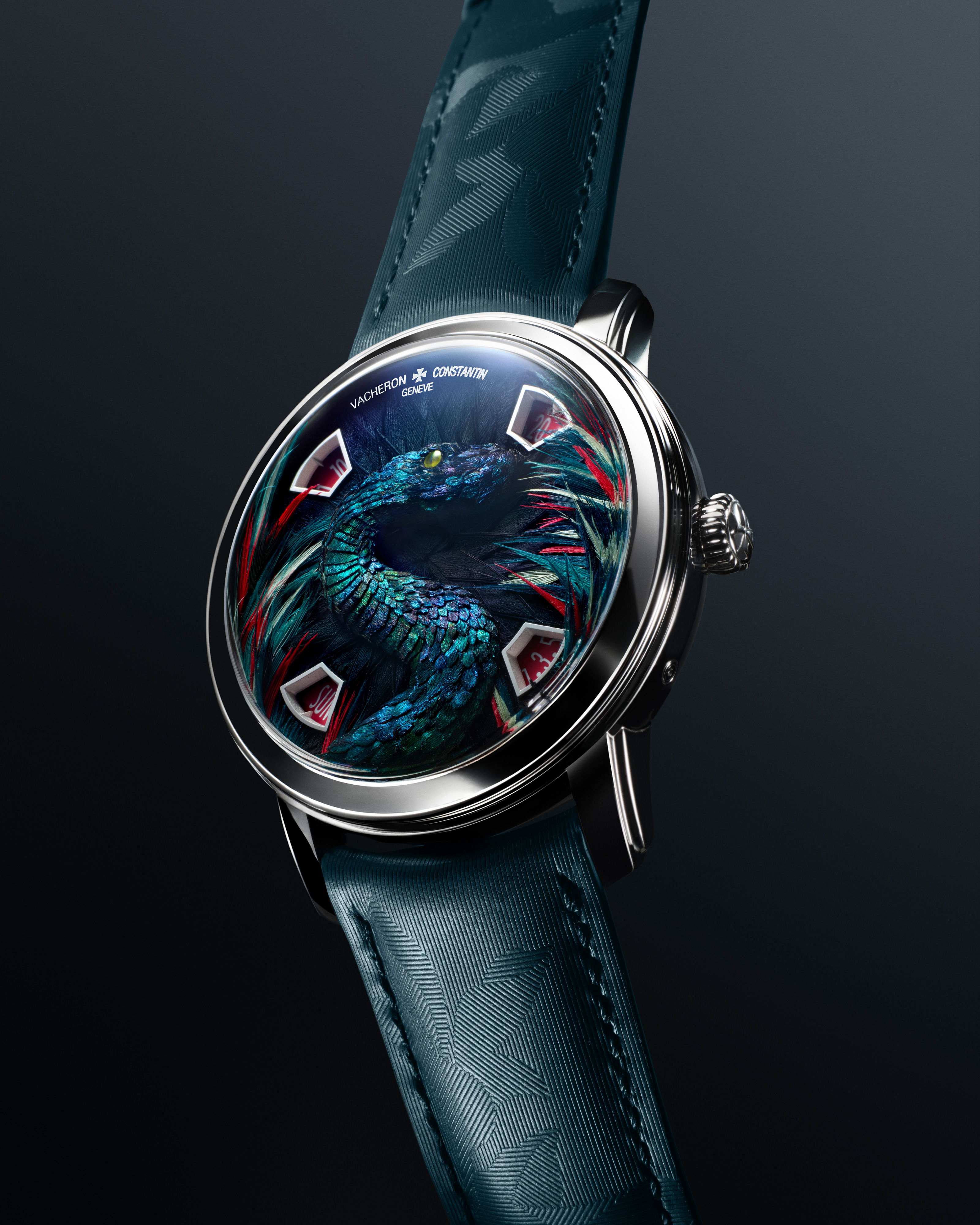
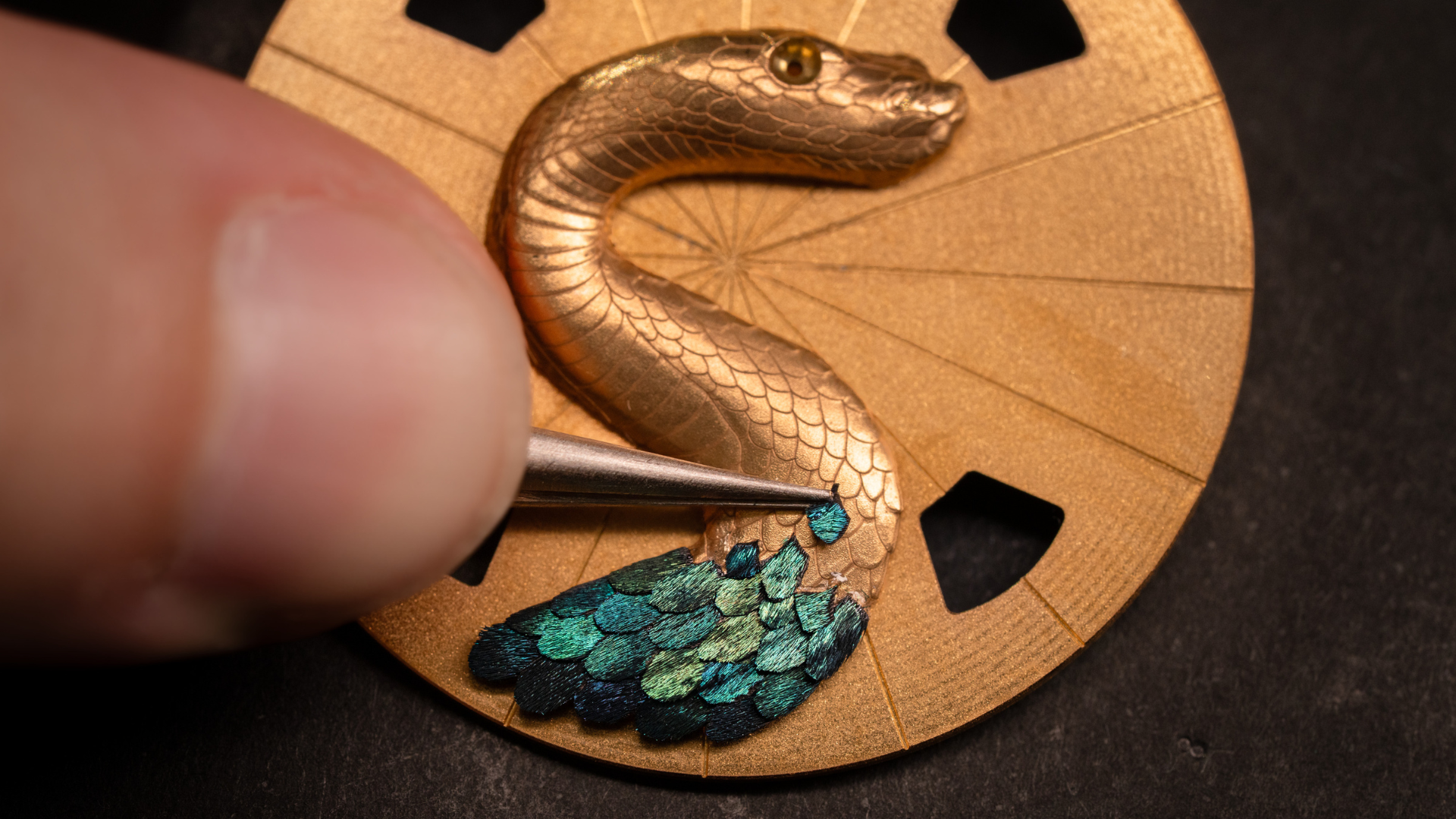
The Feathersnake is perhaps the most immediate demonstration of what happens when an established craft is forced into microscopic dimensions. Julien Vermeulen built the serpent from more than 200 pieces cut from seven rare Lophophore feathers, supported by a metal applique and applied with tools he had to invent, including a micro-scalpel made from a reshaped needle. The final tableau took roughly 250 hours.
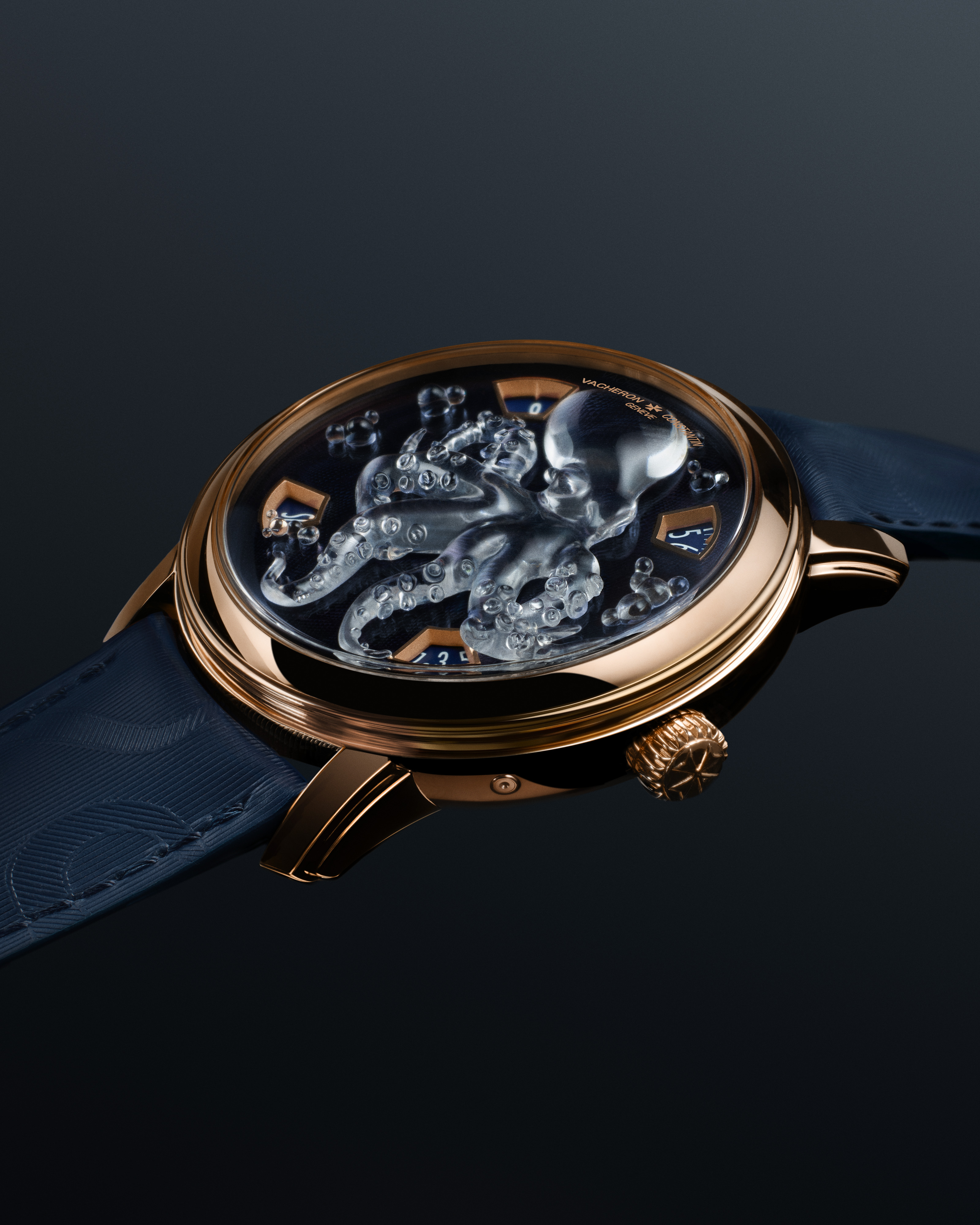
Simone Crestani’s Glassoctopus required a different form of reinvention. Its transparent octopus rises only 3.5mm above the dial, assembled piece by piece from molten glass rods using tungsten tools. The scale made reheating impossible in the usual way, since surface tension could collapse the tiny forms. Instead, the creature was effectively built dot by dot.
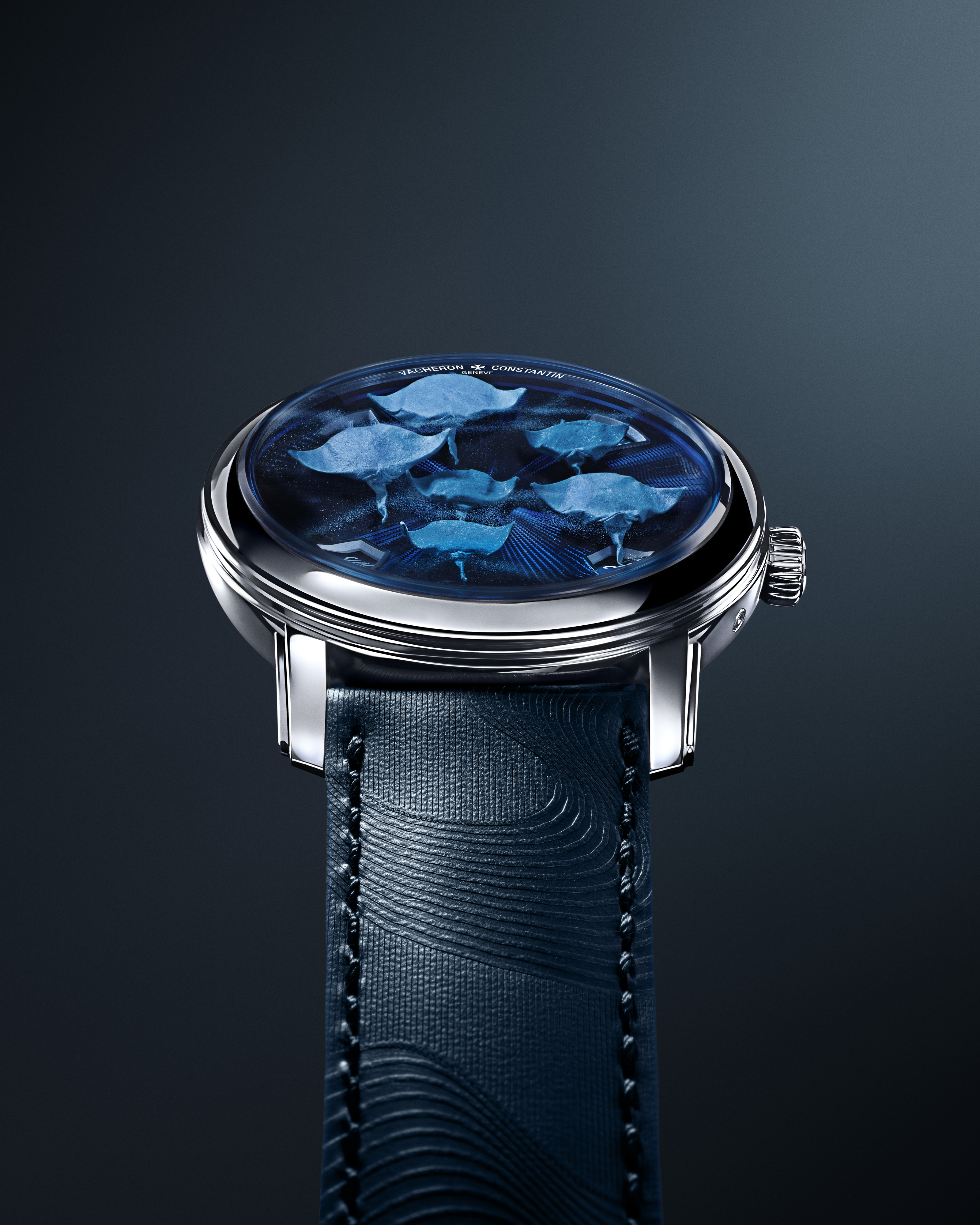
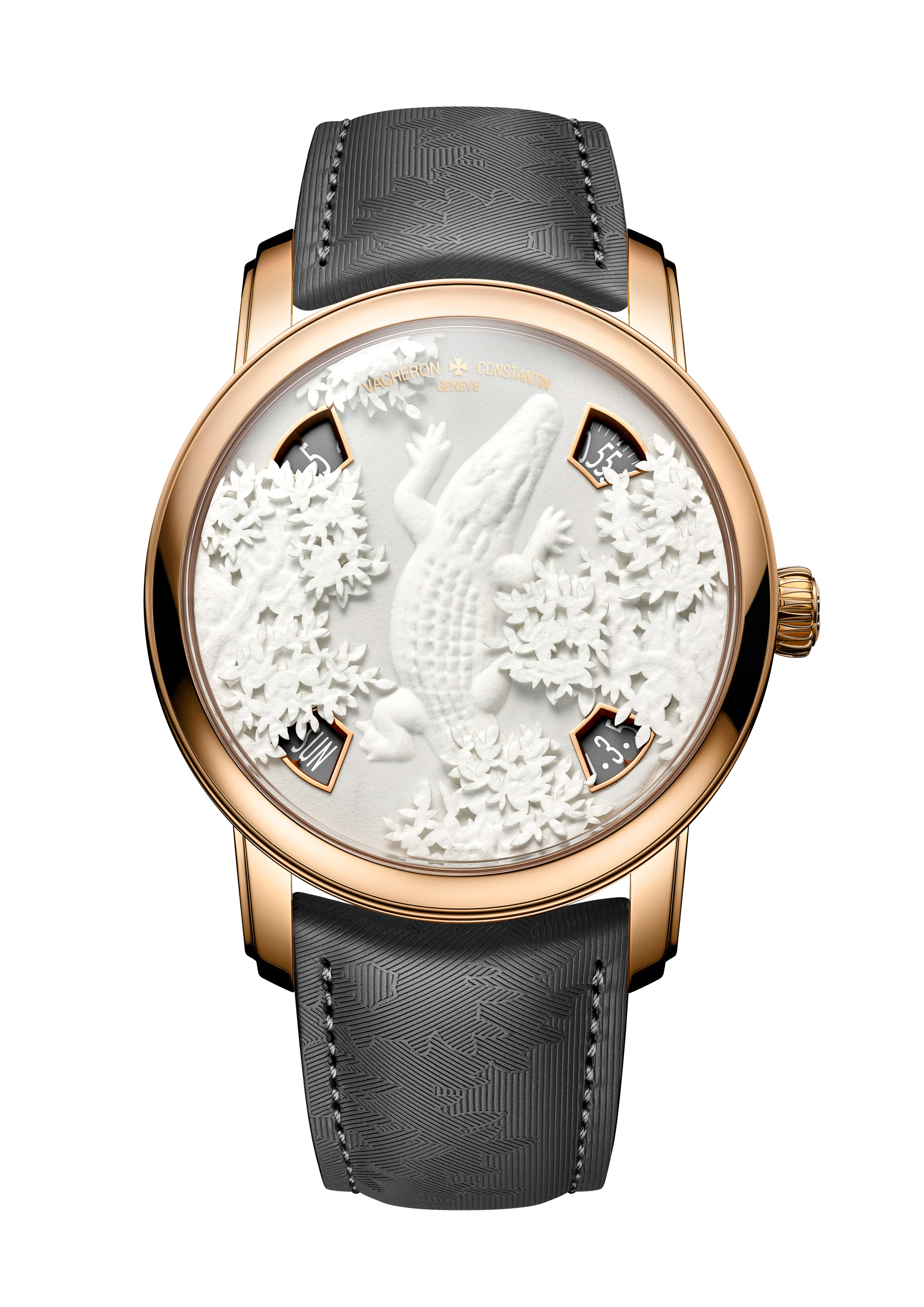
Elsewhere, the project becomes a study in how material behaviour changes at miniature scale. Anya Midori developed an entirely new folding sequence for her paper manta rays, some only a few millimetres long. Laura Baverstock adapted goldwork embroidery to a titanium dial plate, using 9-karat gold wires and needles as fine as 0.25mm. Marianne Guély built an all-white crocodile from layered cotton paper, while Anna Le Corno reworked furniture-scale marquetry into a three-dimensional falcon assembled from 12 wood species.
The animal theme gives the six watches visual continuity, but the more interesting link is technical. Every artist had to abandon habits formed at a larger scale, then rebuild process, tooling and material logic around the tolerances of watchmaking. The project becomes a form of incubation: each dial records a craft learning how to behave differently.
The approach also sits within a longer Vacheron Constantin history of using fauna to test decorative technique. The Maison points to animal-led pieces stretching from a serpent-decorated pocket watch of 1826 to Audubon-inspired enamelled wristwatches in the 1990s, and later Les Cabinotiers creations combining several métiers on a single dial. The new programme shifts the emphasis from combining established crafts to importing unfamiliar ones, making the act of adaptation itself part of the watchmaking story.
That makes Tribute to the Animal Kingdom more than an exercise in decorative virtuosity. It is an argument for the future of métiers d’art itself. Preservation remains central to haute horlogerie, but preservation without experimentation risks turning craft into display. Vacheron Constantin’s six concept watches suggest another route: keep the hand, keep the skill and give both a new problem to solve.
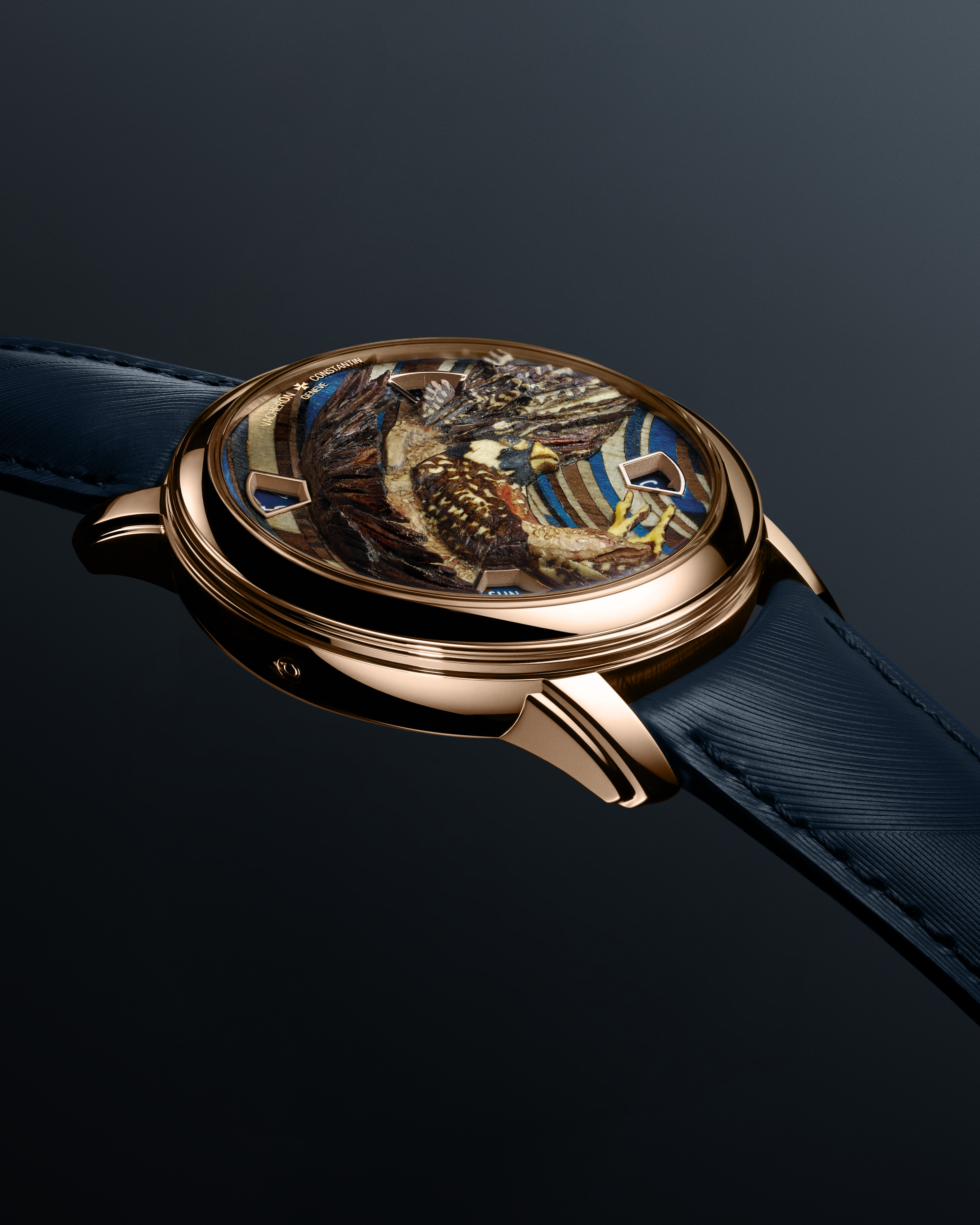
Image credits: Respective brands




.png)
.png)