The Limelight Gala Continues Piaget’s Mastery of the Jewellery Watch
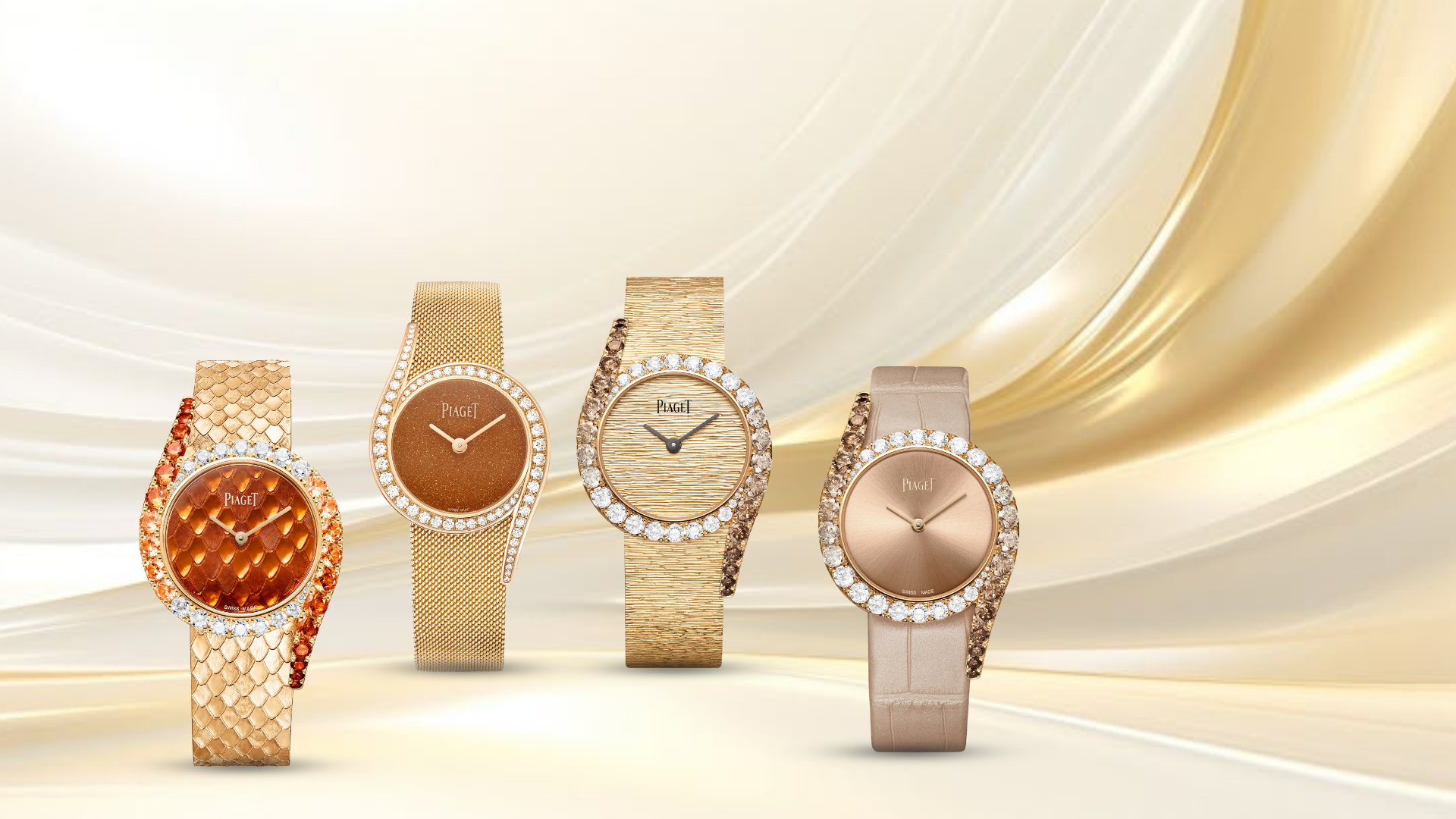

A goldsmith at Piaget works with the sharp tip of a burin and an expulsion of breath, blowing away fine metallic shavings as they appear. The result is a physical manifestation of the hand — a singular pressure applied to the metal that coaxes a hard surface into behaving like heavy silk. As the House of Gold, the Maison maintains a devotion to jewellery and watchmaking in equal measure, treating artistry and craftsmanship as an inseparable discipline. This spring, the 2026 Limelight Gala arrives with this lineage intact, a quintessential jewellery watch named for its understated glamour and appearances at 1970s jet-set galas.
The architecture of the watch dates to 1973, when Jean-Claude Gueit looked at the circular case and allowed it to unravel. The resulting asymmetry — those elongated, sweeping lugs that trail off like the tail of a brushstroke — lent the piece an air of movement and seductive playfulness. It was a silhouette designed for the Piaget Society, that migratory flock of artists and hedonists who required their jewellery to be as mobile and spirited as their itineraries.

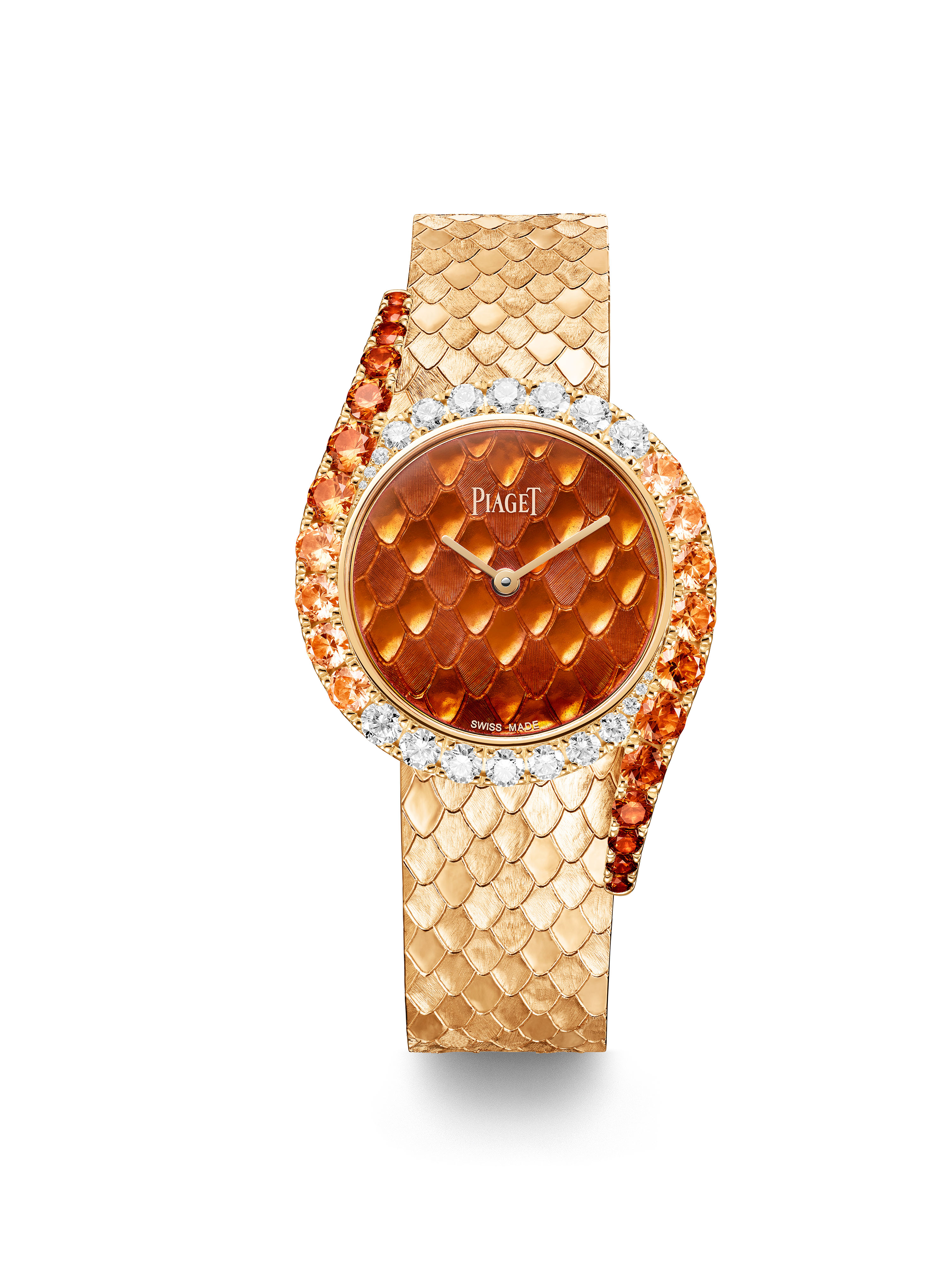
For Spring 2026, the Maison expands this architectural disruption with two distinct expressions of Métiers d’Art. The first is an extrovert, flame-hued timepiece that leans into the primal. Its dial features vibrant orange Grand Feu enamel layered over gold that has been hand-engraved to replicate the imbricated scales of a serpent. This recherché technique, a signature revived from the 2019 Extremely Lady collection, creates a trompe-l’œil effect of sinuous depth. The circular case is encircled by a liquid cascade of diamonds that spill over the lugs, transitioning into a meticulous dégradé of spessartite garnets. The stones are sequenced with a painterly eye, shifting from icy brilliance to sun-scorched sunset shades, all integrated into a matching snake-skin engraved gold bracelet.
In parallel, Piaget unveils a second model that serves as a masterclass in the House’s most enduring signature: the Décor Palace. First developed in 1961 and famously championed in the 1969 21st Century Collection, this technique was born of a desire to rebel against the sterile, machine-polished surfaces of traditional Swiss horology. Here, the rose gold of both dial and bracelet is subjected to the rhythmic movement of the burin. Inspired by the principles of guilloché, the textured surfaces transform the metal from a structural support to a vivid focal point. Because the pressure and gesture of the artisan are unique to the moment of creation, each watch remains a singular work of art.
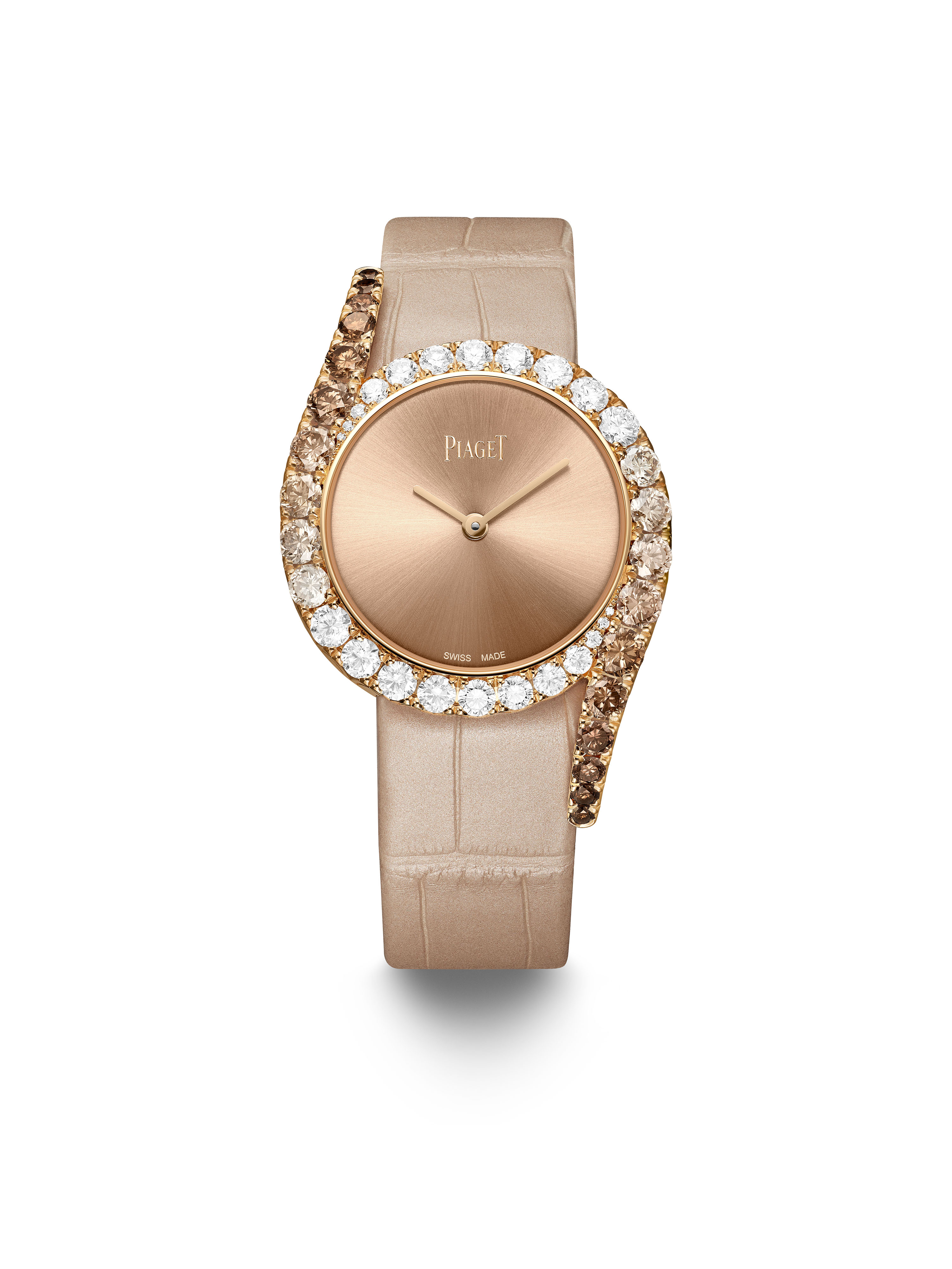
The appeal of a jewellery watch has always rested in its ease. It slips on, settles against the skin, and accompanies whatever the day happens to contain. The Limelight Gala was conceived with precisely that spirit in mind — something fluid enough to move with its wearer, whether the evening begins with a late lunch on a terrace or ends somewhere under low lights. The lines of the watch have always carried that sense of motion with elongated lugs, the spill of stones, the bracelet that folds around the wrist with the suppleness of finely worked gold.
Image credits: Respective brands