A Glimpse Within: Five Maisons and Their Open Heart Masterpieces


The open heart dial is one of watchmaking's most praised and admired designs. A single aperture, cut where the dial can best afford the loss, gives the balance wheel a stage and gets incorporated into the dial to show enough, but without showing too much. The numerals stay composed, the hands stay legible and the mechanism keeps its dignity by appearing in only one small place. It is a gesture of proportion more than of complication, and proportion is the quality a collector learns to prize last and trust most. Judged on that measure, the open heart is not a novelty. It is a test of whether a house knows how much to say.
The panache in showing less
The idea has been with watchmaking longer than its recent popularity suggests. A Swiss patent filed in 1904 covered a watch with a circular opening that exposed the balance and nothing more, and designers have been quarrelling over its proportions ever since. The difficulty is one of tact. The window must sit where the eye already expects calm. The wheel beneath it must be finished well enough to survive the attention it invites. And the dial around it must behave as though nothing unusual is happening, so that reading the time never becomes a negotiation.
A skeleton watch surrenders everything at once. The open heart rations its confession, and a collector learns quickly that the rationing is where the craft lives. What follows are five watches from five houses, each answering the same question differently: how much of a movement should a dial be willing to admit?
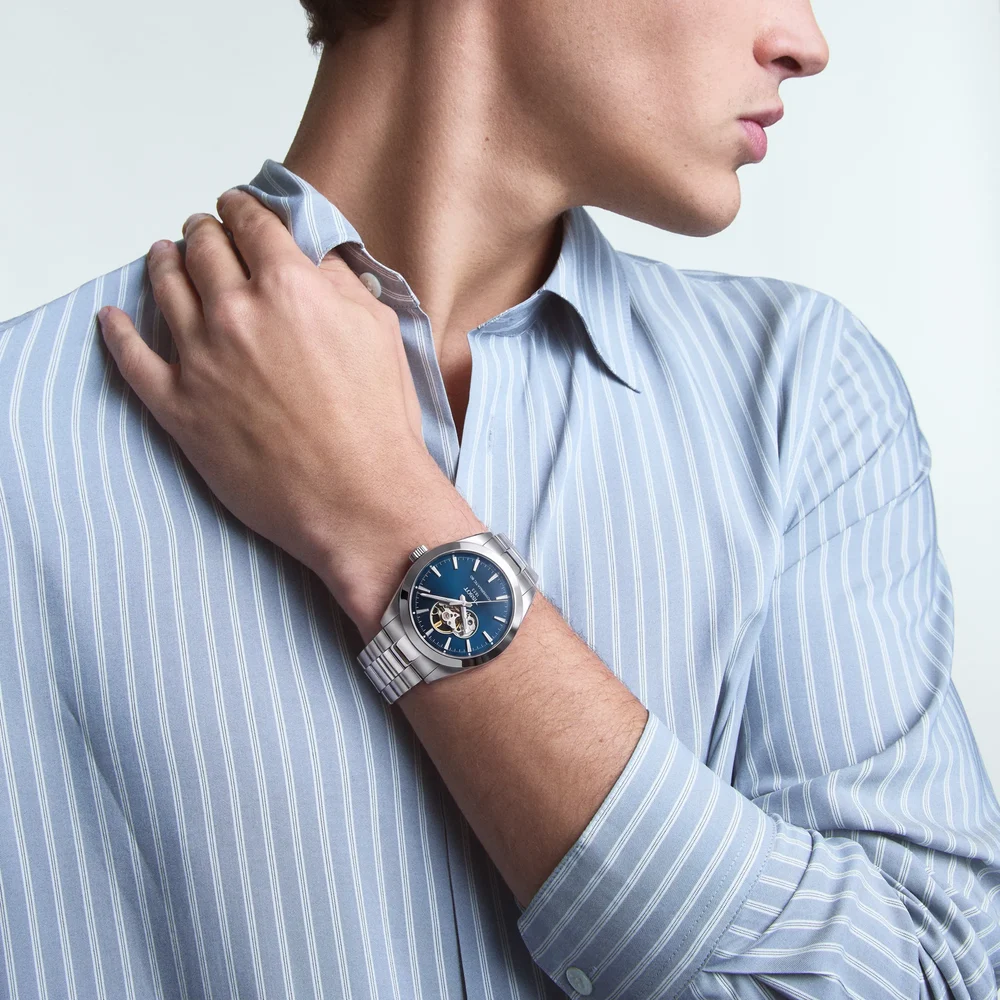
A gentleman’s watch : Tissot Gentleman Powermatic 80 Open Heart
Tissot makes the case for mechanical watchmaking to someone who has never owned a mechanical watch. Its Powermatic 80 movement holds roughly 80 hours of power, so the watch can sit on a dresser through a weekend and still be running on Monday morning. The aperture lets you see the wheel that earns that endurance. For a collector, it works as a reference point, the plain, honest example against which the finer ones on this list are measured.
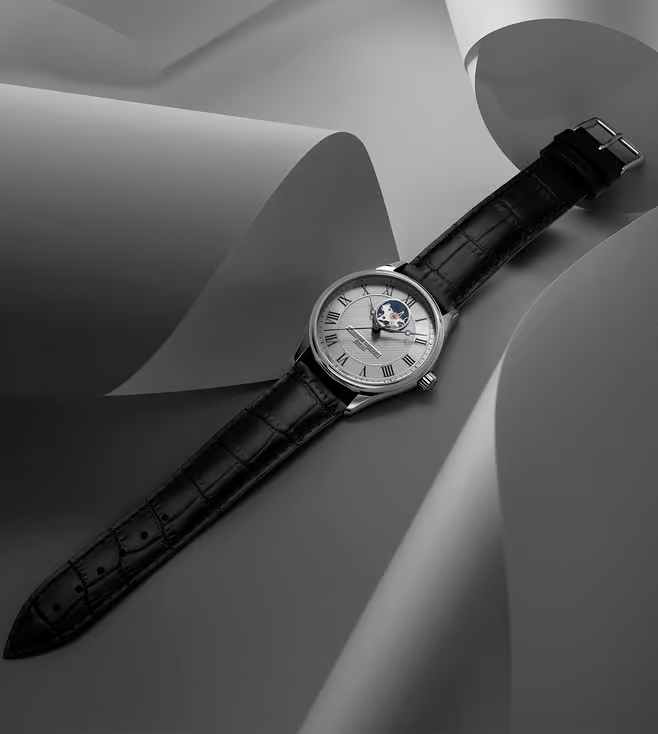
A watch to prove a point: Frederique Constant Classics Heart Beat
No house has bound itself to this window as thoroughly as Frederique Constant. The Classics Heart Beat presents as a formal dress watch first, with the balance wheel appearing as a small, deliberate interruption in an otherwise composed dial. Collectors who care about lineage will recognise it as one of the watches that turned an obscure aperture into a shared design vocabulary. It remains the clearest statement of the idea.
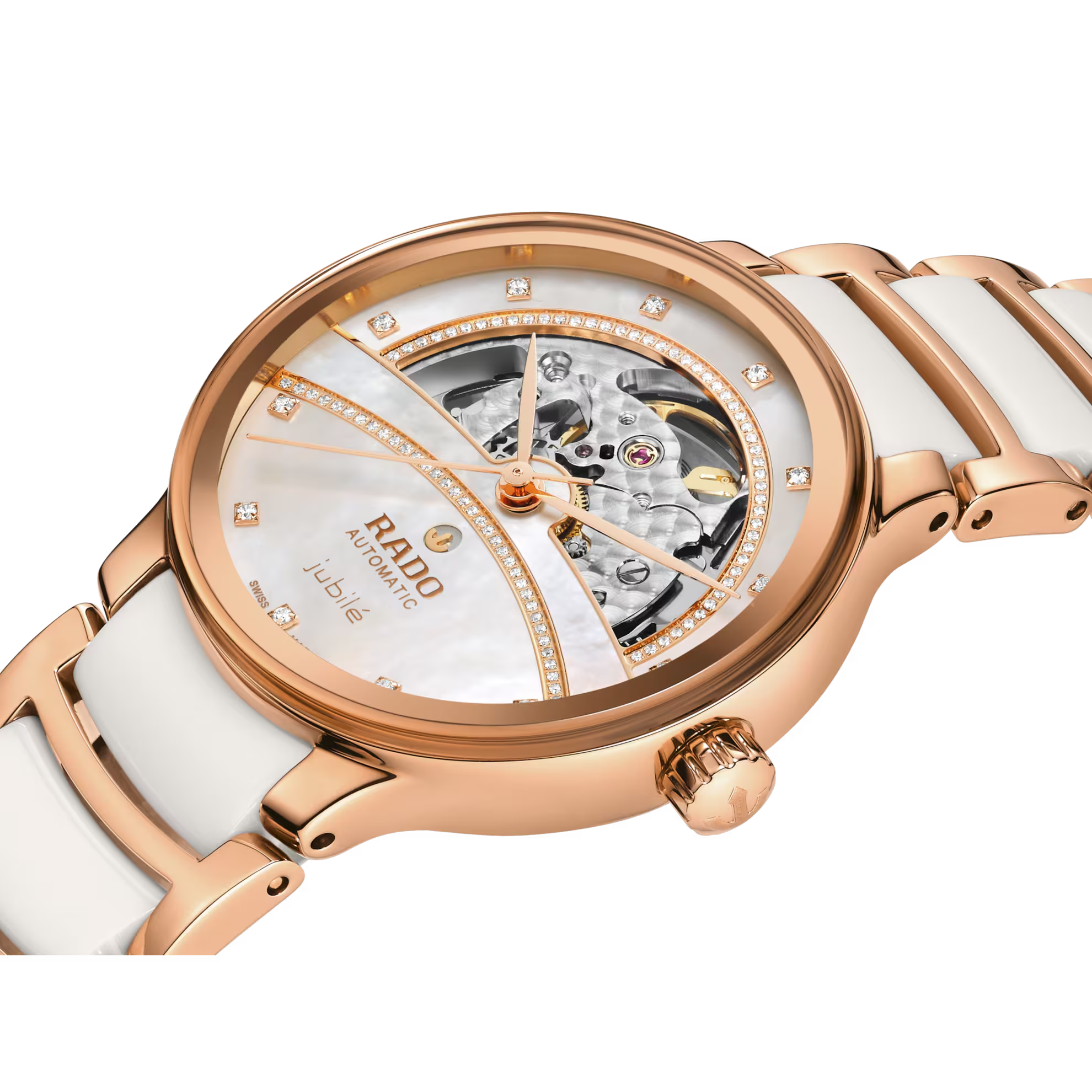
The architect of emotions: Rado Centrix Open Heart
Rado approaches the watch as a materials house, and its command of ceramic gives its designs an exactness few rivals can match. The Centrix Open Heart carries that discipline into the window. The aperture looks planned alongside the case rather than cut into the dial afterwards, which gives the watch a contemporary, almost structural character. It suits the collector who prefers a hard edge to a soft one.
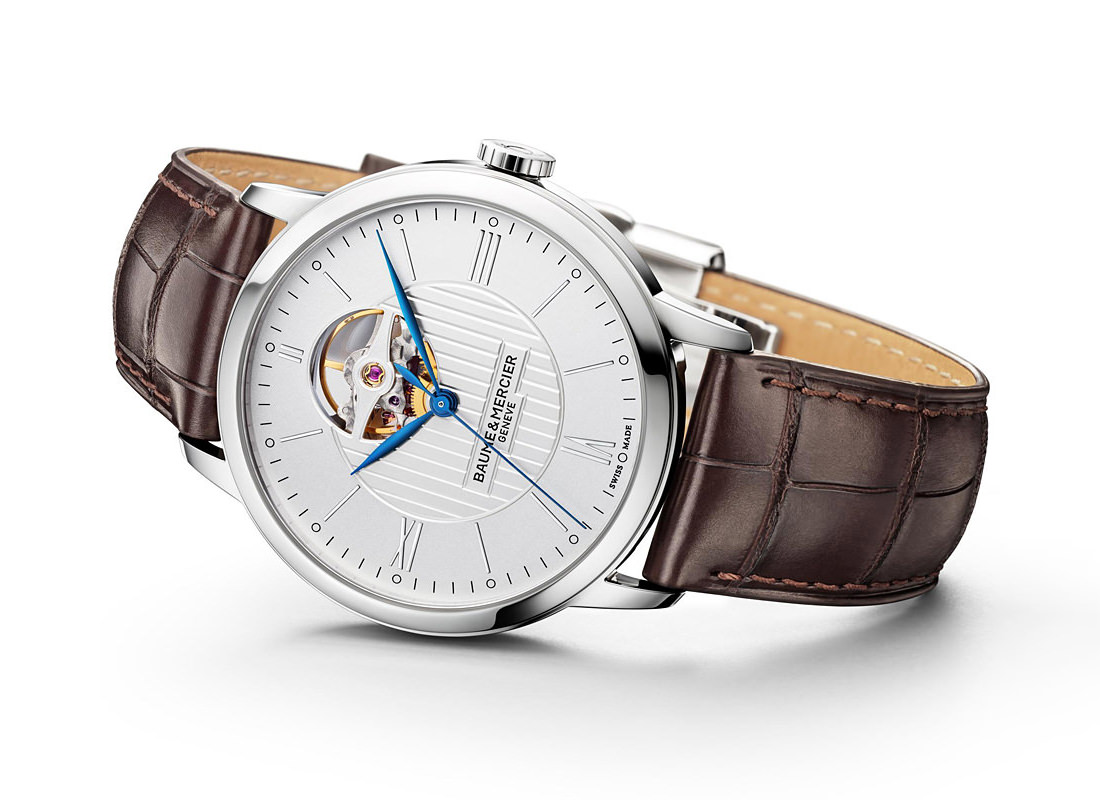
From a maison that only accepts perfection: Baume & Mercier Classima Open Heart
Baume & Mercier cut the Classima to slip beneath a shirt cuff. The case is slim, the Roman numerals are dignified and a circular window at 12 o'clock shows an automatic movement running at 28,800 vibrations an hour. Nothing on the dial competes with that window, and nothing needs to. It is the most reserved watch here, and the one most likely to be noticed only by people who look twice.
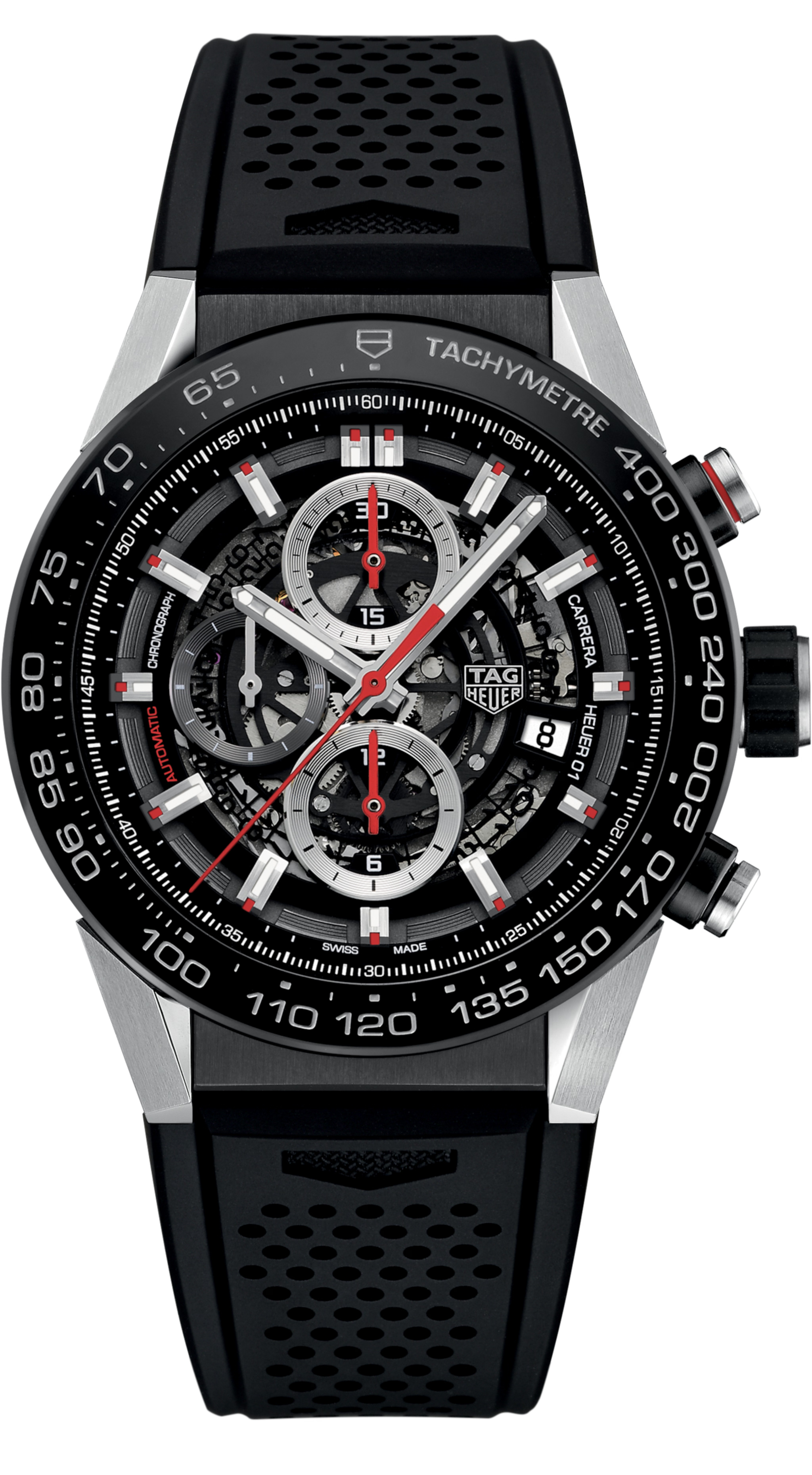
A watch lead by a punishment: TAG Heuer Carrera Skeleton
Jack Heuer drew the first Carrera in 1963 and named it after a punishing road race, which gave the line a sense of motion from the start. The skeleton version removes the dial entirely and lets the mechanism fill the space. It goes well beyond a single aperture, and that is why it closes the list. After four watches that ration the view, this one throws open every door at once.
The last glance
Seen together, the five refuse to repeat one another. Tissot instructs, Frederique Constant defines, Rado draws, Baume & Mercier tailors and TAG Heuer stages a performance. The same small window means something different on each dial, and anyone who lives with more than one will notice how much the surrounding design changes its effect. What binds them is editorial judgement. Each house knew what to include and what to leave out, and in a category that tempts makers towards excess, knowing what to leave out is the harder skill.
Image Credits: Respective brands